 鲜花( 0)  鸡蛋( 0)
|
本帖最后由 purifiedmind 于 2010-7-31 15:59 编辑 # \3 }8 y7 Q5 V" u0 F, z
, u# H' [0 F3 b9 h/ f% T) p
Release from suffering is gained by seeking refugee in the Buddha, Dhamma and the Sangha
: ]1 R& Q8 }& v2 y# H* X" L! J- b7 O9 S; K4 a
To many a refuge fear-stricken men betake themselves - to hills, woods, groves, trees, and shrines.
2 a: O, g& C: _* A- b. w2 o* w5 D0 |' j# E& b: {$ b" u
Nay no such refuge is safe, no such refuge is supreme. Not by resorting to such a refuge is one freed from all ill. 5 S' o y1 V; O2 ?
+ d) M6 n' `6 c6 {* I2 c
He who has gone for refuge to the Buddha, the Dhamma, and the Sangha, sees with right knowledge the four Noble Truths - Sorrow, the Cause of Sorrow, the Transcending of Sorrow, and the Noble Eightfold Path which leads to the Cessation of Sorrow. This, indeed, is refuge secure. This, indeed, is refuge supreme. By seeking such refuge one is released from all sorrow. 1 f) ]" _" q* U! ~8 i" m
6 N; {7 x4 X7 R0 m) s- F
Ven. Nàrada, Dhammapada7 t. S( [, O: C# A5 u
' E5 S2 T) f; v: m" k* m0 X6 J6 ^ jVen. Kakkapalliye Anuruddha Thera 解释了以上的偈诵。 # E4 M) a4 u) P* R% s: v
7 f5 a" s6 K0 z人们在遇到恐惧时,会向各种东西如向森林、石头或庙宇等祈求庇佑。这些行为的根源是恐惧。佛教认为这不是正确的方法,也无法去除苦。皈依佛法僧,认识四圣谛—苦集灭道,才是至上和安稳的保护,所有的苦亦都会除去。
9 t, ~# H+ Q( M0 ]7 n
% f# W4 U# E- U- }" U然而,直到现在仍有人相信森林、石头和深山等能够保护人,当他们看到大树或大石,便会认为它们可能有精灵或神明存在。英国出现火车头的时候,人们相信一些精灵在推动机器,使火车头能够行驶。这种信仰是世代相传。 9 L/ \# g& }, g% t' m
. C* x2 I' Z* y; U* R5 F% D
恐惧是与生俱来的,缺乏安全感亦会带来恐惧。恐惧是一些宗教信仰的成因。佛陀教人皈依佛法僧,以获得真正的安全。佛教认为单靠信仰是不足除去恐惧的,人应认识四圣谛,明白事物的实相。
! n k" a7 l) X4 q d p5 W% j, V. h
苦可解作痛苦、五蕴和无常等。渴爱和无明是苦的成因,它们是不能分开的,使人不断在轮回中流转。涅盘是苦的止息境界,是一种没有生死的境界。八正道是止息苦的途径。佛教认为信和智慧能拯救人生,解脱所有的苦。
2 Z" _0 p) }4 n/ b! E
% _- m D5 G; \8 P1 R这首偈诵与一名外道有关。
: q7 L+ X/ I# U6 P! H D" U6 x8 _6 i5 D: \3 ^
摩诃乔萨罗是乔萨罗国的统治者,他死後由儿子波斯匿继位。波斯匿王与佛陀是同时期的人,也是佛陀的信徒。波斯匿王很尊重父亲的顾问祀得 (Aggidatta) ,每当祀得到来,他都会起座以示尊敬。祀得认为波斯匿王过於尊敬自己并不适宜,加上自己年纪老迈,国王应委任一个年青的顾问。祀得於是向波斯匿王请辞,到森林出家过修行者的生活。
5 i: [1 C: V+ f% Z; W" d b l$ A/ F7 L
/ A5 m, M% E/ C( `, i2 A9 [祀得有很多追随者,一起在森林修习。他向学生指出心中生起欲望是不恰当的,应该接受惩罚。他又教导学生向森林、山和树等作为皈依处。 + T. p+ @; \# q# C" l* |4 V
; O/ f. B- x/ d7 ]3 |# I4 \5 M) K佛陀知道到祀得的行为後,决定设法让他明白这样的信仰和生活方式是错误的。佛陀指派大目犍连 (Maha Moggallana) 前往祀得居住的森林,指导他们正确的修行方法。
* m' n& m, {. g7 \4 l/ _. M
8 K }$ _ E2 p大目犍连来到的时候,遇到守护森林的巨龙,他以神通降服了这条龙。後来,佛陀亦来到,指出祀得的教法是错误的,误导了跟随者。佛陀於是说出了以上的偈诵。 |
|




 狗仔卡
狗仔卡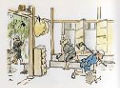
 发表于 2010-7-31 15:13
 提升卡
提升卡 置顶卡
置顶卡 沉默卡
沉默卡 喧嚣卡
喧嚣卡 变色卡
变色卡 显身卡
显身卡
 楼主
楼主
 发表于 2010-8-2 19:09
